
10 Natural Dewormer for Shih Tzu: Holistic Approach to Prevent Parasites (Real Experience)
“Do I really need to give my Shih Tzu a deworming pill every single month?”
This was the question I kept asking myself when I first became a Shih Tzu parent.
Like most first-time dog parents, I wanted to do everything “by the book.”
The vet instructed monthly deworming medication, so I complied without question.
But each time I slipped that tablet into his food, a part of me wondered if I was really helping… or quietly hurting the gut I was trying to protect.
The thought of worms living inside our dogs is terrifying, I know.
But what I didn’t realize back then is that a strong gut and immune system are often the best defense nature already gave them.
Constant chemical deworming can strip that away, leaving our dogs even more vulnerable.
That realization sent me on a journey.
I dove into research, tried gentle herbal remedies, and started using whole foods that make the gut not livable for parasites.
In this article, I’m gathering everything I’ve learned during this journey: 10 natural dewormers for Shih Tzus, with recipes, personal experiences, and research-backed tips.
I hope that this gives you confidence, so you don’t have to choose between protecting your dog and preserving their health.
Why Natural Dewormers for Your Shih Tzu?
Before I continue, I want to make it clear: I am not anti-vet.
My philosophy is to do everything I can to protect my Shih Tzu (and yours) with natural methods first.
But if, after all preventative steps, worms are still detected, I absolutely agree that a round of conventional dewormer is sometimes necessary.
In fact, I learned this approach from Dr. Don Hamilton DVM, the author of Homeopathic Care for Cats and Dogs.
He explains in the book (P.382),
“…I tend to simply use conventional drugs here in acute phases, and homeopathy and supportive treatment to support overall health and reduce susceptibility.”1
The most common chemical dewormers vets prescribe include:
- Fenbendazole (Panacur®)
- Pyrantel pamoate (Strongid®, Nemex®)
- Milbemycin oxime (Interceptor®, Sentinel®)
- Moxidectin (Advocate®, ProHeart®)
- Praziquantel (often combined with others, like Drontal®)
These medications can be life-saving when a true infestation is confirmed.
The issue is that they are often handed out almost like candy, “just in case,” without checking whether your dog actually has worms in the first place.
Bonus: Download FREE Shih Tzu Herbal Tea Handbook ➔
Why am I not a fan of giving chemical dewormer “just in case”
1. Gut Health Disruption
These drugs don’t just kill parasites, they also disturb the gut microbiome.
A disrupted gut can mean chronic diarrhea, acid reflux, itchy skin, and a weaker immune system.
I saw it firsthand with Billy’s frequent vomiting after all the “just in case” deworming.
2. Resistance Is Real
Recent research shows us that gut worms have already evolved to outsmart the common dewormers:
A 2023 study found widespread benzimidazole resistance in canine hookworms (Ancylostoma caninum) in the U.S., with nearly 50% of dogs carrying genetic mutations that make the drug less effective.2
In 2021, the AVMA had already warned of drug-resistant hookworms spreading in dogs due to overuse and misuse of anthelmintics.3
A recent Australian study in early 20254 echoed the same concern.
Dr. Abdullah said the best weapons against canine hookworms have been benzimidazole-based dewormers, but they are starting to fail.
Routine monthly deworming could mark the end of “easy parasite control” unless we adopt more mindful, test-based strategies.
In short, the more often we deworm our dogs without testing, the more we help create “superworms” that no longer respond to the drugs we rely on.
3. Nature Has Its Own Defense
A strong gut and immune system can naturally keep parasite loads in check.
Dogs are designed to handle a small number of worms without harm.
Personal Experience with Natural Dewormer for My Shih Tzu
When I first switched away from monthly deworming tablets, I’ll be honest…I was nervous.
What if natural remedies weren’t enough?
But over time, my fears softened as I began to see his gut settle and the morning vomiting stopped.
I realized that prevention doesn’t have to come from a pill. It can come from food, herbs, and a stronger immune system.
I learned what foods work against parasites, and make Billy’s overall diet more anti-parasitic.
And while there were ups and downs, each step taught me something valuable.
Yes, there was a time when Billy’s stool test showed roundworms.
Living in an area with wild rabbits, mice, and hedgehogs means exposure is almost inevitable. And roundworm eggs are notoriously tough.
We followed the vet’s advice and did two rounds of conventional dewormer.
Afterward, I supported his recovery with a round of garlic, raw pumpkin seeds, and a herbal worm-prevention snack.
Since then, worms have stayed out of the picture.
The biggest lesson I learned?
Worm prevention isn’t magic, and it isn’t something to panic over. Parasites are a part of life. What matters is how well we prepare our dogs’ bodies to handle them.
I love how Rob Ryan, the co-founder of Gussy Gut, puts it:
“Dogs will be dogs, and parasites will do what parasites do. That’s why we focus on building a strong microbiome. Because when your dog dives headfirst into life, the gut should be ready for it.”5
10 Natural Dewormers for Shih Tzu and How to Use Them
1. Pumpkin Seeds
Pumpkin seeds may sound like old news.
Most dog parents have heard they’re antiparasitic.
But let me assure you: they REALLY do work.
When Billy once tested positive for roundworms, I used pumpkin seeds as part of the treatments.
Within 4 days, his stool quality improved, and I strongly believe the seeds played a big role in helping his body push the worms out.
I never actually saw worms in his stool, but I’ve learned to recognize the subtle changes in consistency when his gut is under parasite stress.
Pumpkin seeds contain cucurbitacin, an amino acid that can paralyze intestinal worms and disrupt their life cycle, making it easier for the body to expel them naturally.
How I use it:
- I grind raw pumpkin seeds fresh and soak them overnight in a little hot water.
- In the morning, I feed the softened seeds on an empty stomach, about 20 minutes before breakfast.
- As a treatment for an acute case, I follow a 10 days on → 5 days off → 10 days on cycle.
- As a general prevention, you can simply sprinkle ground seeds over food 2–3 times a week.
Dosage:
- 1 tsp of ground raw pumpkin seeds per 10 lbs of body weight
- Always use raw, unsalted seeds
2. Grated Carrots
Grated carrot is probably one of the most underrated foods that is recognised as a natural parasite preventative.
The combination of fiber and roughage acts like a gentle scrub brush for the intestines.
As the fiber moves through the digestive tract, it helps sweep away mucus, buildup, and even worms or their eggs.
On top of that, carrots are rich in beta-carotene (a precursor of vitamin A), which supports immunity and makes it harder for parasites to thrive.
In Billy’s meals, I often include cooked carrots as a healthy fiber source.
But when I want to use them more intentionally as a worming aid, I prepare a cleanse.
Here is how I use carrots as a natural worming remedy:
- Every 3 months, I give Billy a 10-day cleanse on an empty stomach.
- I mix freshly grated carrot with coconut flakes, ground pumpkin seeds, and a touch of blackstrap molasses.
- This mix acts like a natural brush, helping to sweep the digestive system clean.
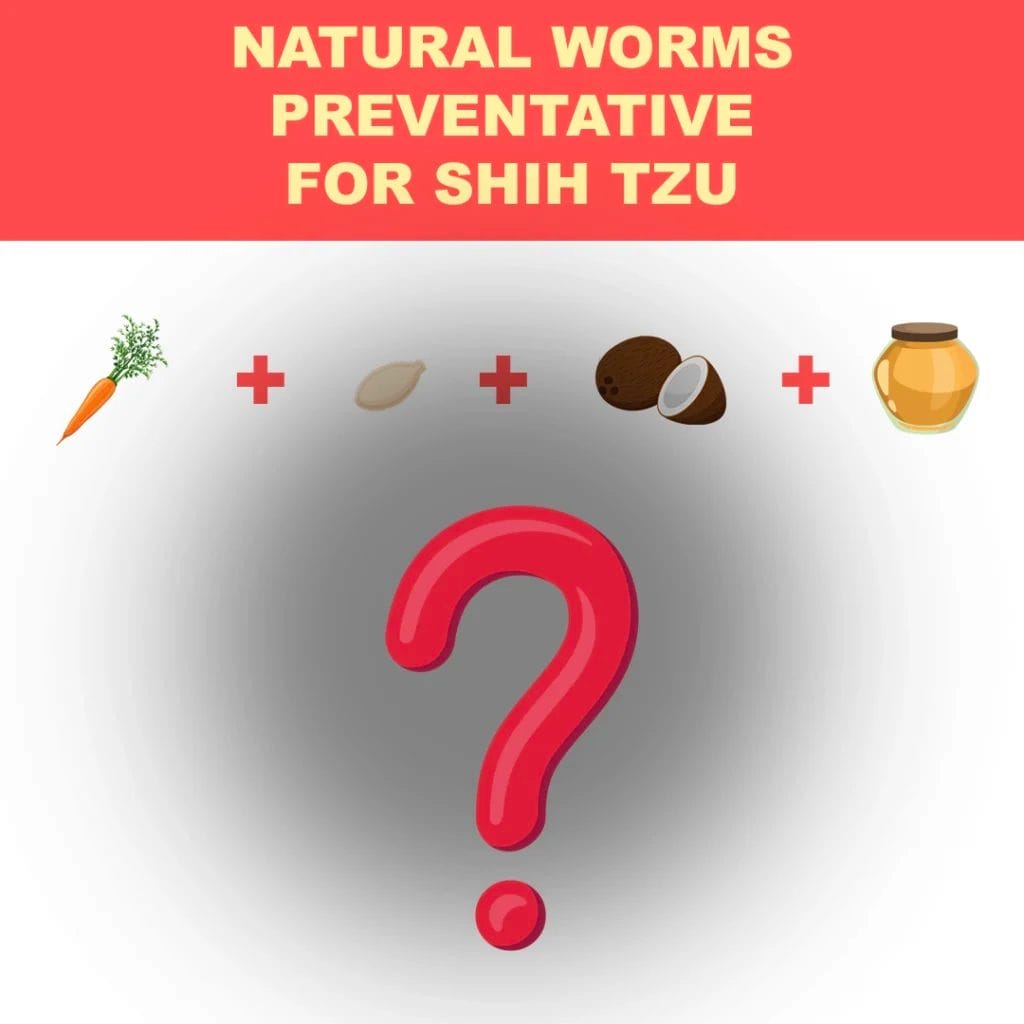
If you want the full recipe, click below and grab it for FREE.
Bonus: Download FREE Shih Tzu Herbal Tea Handbook ➔
3. Coconut Flakes
Besides combining it with carrot and pumpkin seeds (as mentioned above), dried coconut flakes on their own can also make the diet naturally antiparasitic.
Coconut is a great source of lauric acid, a medium-chain fatty acid that can paralyze gut parasites.
When ingested, lauric acid disrupts the parasites’ cell membranes, causing them to lose electrolytes and making it easier for the body to expel them.
When I first added dried coconut to Billy’s meals, I noticed not only that he loved the taste, but also that it seemed to support firmer, healthier stools.
That said, coconut is considered energetically hot in Traditional Chinese Veterinary Medicine.
It might not be the best option for dogs who already “run hot,” and in some dogs, too much can cause digestive upset. That’s why I always start small and watch how Billy responds.
Coconut is a gentle, tasty addition to a natural parasite-prevention plan — and most dogs enjoy it.
How I use it:
- I include dried coconut flakes in Billy’s meals from time to time.
- On occasion, I also include coconut oil, but flakes are my go-to.
Dosage:
- Small Shih Tzu (5–7 kg): start with ¼ tsp dried coconut per day
- Can increase gradually up to 1 tsp daily if well tolerated
- Always monitor your dog for signs of loose stools or overheating
TIP: If you are interested in actual recipes that I feed Billy, you can grab The Shih Tzu Cookbook

4. Raw Garlic
Ah, let’s talk about garlic.
I believe you have seen the conflicting information online
Conventional vets often warn that garlic is toxic, while holistic practitioners post reels and articles praising its many benefits.
So, which is true?
The answer lies in dosage and preparation.
Garlic can indeed be harmful if given in large amounts or in the wrong form (like powders).
But in small, carefully measured doses, fresh raw garlic can be both safe and beneficial.
For a deeper dive, I highly recommend reading Dr. Conor Brady’s excellent article, Garlic Safe for Dogs? Research Shows The Benefits And Cautions Of Using Garlic In Dog Food.6
Garlic contains allicin, the compound released when garlic is chopped and left to sit.
Allicin has antimicrobial and antiparasitic properties, making the gut less hospitable to worms and other unwanted organisms.
A landmark 1969 study published in the American Journal of Tropical Medicine and Hygiene7 showed that raw garlic was highly effective at killing Giardia lamblia, a common intestinal parasite.
This study concluded that raw garlic is more effective against baby worms than adult worms.
Another study (2011)8 suggests that when garlic is combined with other antiparasitic foods, such as pumpkin seeds or pumpkin seed oil, it can reduce parasite larvae counts by up to 90% across six common worm species.
So, do I feed raw garlic to my Shih Tzu?
Yes, not only because it makes his overall diet more antiparasitic, but also because garlic is a sulfur-rich food that supports the final phase of the liver’s detox pathways.
How I feed garlic to my Shih Tzu:
- Always use fresh raw garlic (never powders or dried forms)
- Peel, chop, and let it sit for 10–15 minutes before feeding
- Avoid garlic imported from China (it may be contaminated with arsenic)
- Avoid use in puppies under 6 months, dogs on blood thinners, or dogs with anemia
Dosage & schedule:
- Up to ⅓ tsp fresh raw garlic per 10 lbs body weight per day
- For a cleanse: 10 days on → 5 days off → 10 days on
Garlic can also support digestion by reducing food stagnation from a TCM perspective.
And may help naturally repel fleas and ticks.
4 Other Safe Herbs and Spices for Shih Tzu include ginger, parsley, cilantro and chamomile. Read the whole article to find out how they can support your Shih Tzu’s health, especially in Winter.
Bonus: Download FREE Shih Tzu Herbal Tea Handbook ➔
5. Chamomile
I absolutely love chamomile. It’s my go-to herb for Billy.
From topical uses like an after-shower rinse or a warm eye compress, to internal support for soothing the gut and deterring parasites, chamomile is a powerful and versatile herb that I always keep stocked in my drawer.
The deworming effect of chamomile may be gentler and slower compared to some of the other remedies I’ve mentioned, but that doesn’t make it less effective.
Its anti-inflammatory and antimicrobial properties create a gut environment that’s less hospitable to parasites.
At the same time, chamomile’s natural soothing qualities help ease digestive discomforts such as gas, bloating, or acid stomach, issues that often appear alongside gut worms.
Because chamomile works gradually, it’s most effective when used consistently over a longer period.
How I use Chamomile as a natural dewormer:
Chamomile infusion (tea):
- Steep 2 g dried chamomile in hot water for 20 minutes.
- Serve 1 tsp of the cooled chamomile tea over food daily for a period of one month.
- I also like to add the softened herbs from the infusion directly into Billy’s food.
Chamomile tincture:
- Give 5 drops of chamomile tincture per 15 lbs body weight, twice daily on an empty stomach, for 15 days.
3 Other Ways to Feed Chamomile to Your Shih Tzu:
6. Papaya
Foods that contain orange pigment are also beneficial in a roundworm infestation because they boost vitamin A levels, which speed up the evacuation of the worms.
But this doesn’t mean to give your dog large amounts of carrots or pumpkin.
What it does mean is to consistently give them orange vegetables throughout the day.
And Papaya is one of them.
It contains an enzyme called papain.
It breaks down proteins (the outer wall of gut worms).
Combined with a substance in papaya called benzyl isothiocyanate, which helps stun and kill roundworms.
This makes it harder for worms to survive and easier for the body to sweep them out.
In traditional medicine across many cultures, papaya seeds and flesh have long been used to address intestinal parasites in both humans and animals.
However, I don’t use papaya as a formal “treatment,” but rather as a seasonal preventative.
During summer, when papayas are in season, I give my Shih Tzu small amounts of the fresh fruit as a healthy snack.
It’s cooling, hydrating, and naturally supports gut health.
Dosage:
- Small Shih Tzu (5–7 kg): 2-3 small cubes of ripe papaya flesh a few times a week during summer.
DID YOU KNOW: If you feed fruits and vegetables according to seasons, you can maximise the health benefits! Here are what fruits to feed your Shih Tzu in each season…
7. Thyme
Thyme isn’t just for a kitchen herb.
It’s a powerful antiparasitic plant that we often overlook.
Rich in compounds like thymol and carvacrol, thyme has been shown to inhibit the growth of harmful microbes and weaken intestinal parasites, particularly hookworms.
In holistic veterinary practice, thyme is often recommended not only for its antiparasitic action but also for its ability to support digestion.
It helps reduce gas and bloating while gently stimulating the gut.
I like to include thyme in some of the recipes I cook for Billy.
It’s a simple, subtle way to make meals less friendly to parasites while boosting flavor and gut support.
How I use it:
- Fresh thyme: finely chop a small pinch of leaves and mix into food.
- Dried thyme: sprinkle a tiny amount (just a dusting) over meals.
- Increase gradually if well tolerated, but always keep portions small
- Never use thyme essential oil
Thyme is one of those herbs that quietly does its job in the background.
Over time, it helps create a gut environment where parasites simply don’t feel at home.
One of the recipes for Shih Tzu using Thyme:
8. Bentonite Clay
Bentonite clay is a natural detoxifying agent that has been used for centuries in both human and animal health.
This green clay can bind to toxins, heavy metals, and even certain pathogens in the gut.
While it doesn’t “kill” parasites directly, it dehydrates them, binds them, and then pulls them out of the body.
In holistic veterinary practice, bentonite clay is often recommended as a gentle support during parasite cleanses or after conventional deworming, to help the body recover and flush out residues.
I used this as part of Billy’s detox plan.
How I use it:
- I mix 1/4 tsp of food-grade bentonite clay with a little bit of water into a paste.
- It works best when it is fed on an empty stomach, 2 hours after food or medications.
- Always ensure plenty of fresh water is available as clay is very absorbent
❌ Never use industrial or cosmetic-grade clay; only food-grade bentonite clay is safe for ingestion
Bonus: Download FREE Shih Tzu Herbal Tea Handbook ➔
9. Black Cumin Seeds (Nigella Sativa)
Black cumin seeds, also known as Nigella sativa, have been used for centuries in traditional medicine across the Middle East and Asia.
Modern research confirms what ancient wisdom has long suggested: these tiny black seeds carry powerful antiparasitic, antimicrobial, and immune-supporting properties.
Thymoquinone is the key active compound in black cumin seeds that can inhibit the growth of intestinal parasites.
At the same time, it supports the immune system, making it harder for parasites to establish themselves in the first place.
How I use it:
- Mix 1/4 tsp into food daily for 2 weeks.
- Begin with 1/8 tsp when you first introduce and observe the digestion.
- ❌ Avoid black cumin seed oil
10. Oregano
Oregano is a potent natural antimicrobial and antiparasitic.
Traditionally used in Mediterranean medicine, oregano contains two very powerful compounds: carvacrol and thymol.
These make the gut a far less comfortable place for worms and harmful microbes.
Research has shown that oregano extracts and oils can inhibit the growth of intestinal parasites.
It’s particularly valued in holistic veterinary care as a supportive herb during gut cleanses.
That said, oregano must be used carefully.
The essential oil is far too concentrated and unsafe for dogs, but fresh or dried oregano leaves, in very small amounts, can safely be added to meals.
How I use it:
- Fresh oregano: finely chop a few leaves and mix into food
- Dried oregano: sprinkle a tiny pinch over meals (no more than a dusting)
- Never use oregano daily long-term
How Often Do I Give My Shih Tzu Natural Dewormer?
So, “How often should I actually give these natural remedies?”
The truth is, there isn’t a one-size-fits-all answer.
Every dog is different, and their lifestyle, environment, and gut health all play a role.
But in general, my approach is…
- Every day support: Make the overall diet anti-parasitic. Often include foods like carrots, pumpkin seeds, cumin seeds, or coconut flakes in rotation.
- Seasonal cleanses: Every 3 months, I give Billy a 10-day cleanse around full moon days.
- When there’s risk or symptoms: If I notice changes in his stool, appetite, or energy, I’ll rotate with stronger remedies.
- Testing instead of guessing: At least twice a year, I do a fecal test. If worms are detected, I’ll use a round of conventional deworming and further support detox with natural, whole foods.
When To Take Them To The Vet?
Here are some of the most common signs you might see if your dog has a worm infestation.
And if you are suspicious that your dog might have worms, it’s time to head to the vet’s office with the stool sample.
It will help to pinpoint exactly which type of worm is in the digestive system so that your vet can prescribe the right medication to treat it immediately.
Common Symptoms of Worms in Dogs
- Change in Appetite
If your dog suddenly increases or decreases hunger, it’s time to investigate. - Unexplained Weight Loss
Parasites steal nutrients from your dog’s body. If your dog’s diet has not changed but it is losing weight all of a sudden, it can be a sign of worms. - Visible Worms or Eggs
In some cases, worms may be visible in your dog’s feces or around the anal area. You may see small, white, rice-like segments in the feces. - Lethargy
If your dog seems unusually tired, it also could be a sign that your dog is suffering from a worm infestation. - Vomiting and Diarrhea
Frequent vomiting or diarrhea, regardless of what you feed, can be a sign of gut worms.
Bottom Line
Natural dewormers are about creating a gut and immune system that’s strong enough to handle whatever life throws at your Shih Tzu.
But also remember: prevention is a lifestyle, not a cure.
Rotate these remedies, keep up with seasonal cleanses, and test rather than guess.
👉 If you’d like step-by-step healthy recipes for your Shih Tzu, click on the image below and grab The Shih Tzu Cookbook!